Our Collection

Here you can find the games we regularly bring to our events. We are constantly expanding our library, so be sure to check back often!
The Mind

The Mind

Time: 20 minPlayers: 2-4

The Mind is more than just a game. It's an experiment, a journey, a team experience in which you can't exchange information, yet will become one to defeat all the levels of the game. In more detail, the deck contains cards numbered 1-100, and during the game you try to complete 12, 10, or 8 levels of play with 2, 3, or 4 players. In a level, each player receives a hand of cards equal to the number of the level: one card in level 1, two cards in level 2, etc. Collectively you must play these cards into the center of the table on a single discard pile in ascending order but you cannot communicate with one another in any way as to which cards you hold. You simply stare into one another's eyes, and when you feel the time is right, you play your lowest card. If no one holds a card lower than what you played, great, the game continues! If someone did, all players discard face up all cards lower than what you played, and you lose one life. You start the game with a number of lives equal to the number of players. Lose all your lives, and you lose the game. You start with one shuriken as well, and if everyone wants to use a shuriken, each player discards their lowest card face up, giving everyone information and getting you closer to completing the level. As you complete levels, you might receive a reward of a shuriken or an extra life. Complete all the levels, and you win! For an extra challenge, play The Mind in extreme mode with all played cards going onto the stack face down. You don't look at the cards played until the end of a level, losing lives at that time for cards played out of order.

More Info
Bohnanza: Dahlias

Bohnanza: Dahlias

Time: 0 minPlayers: 3-5

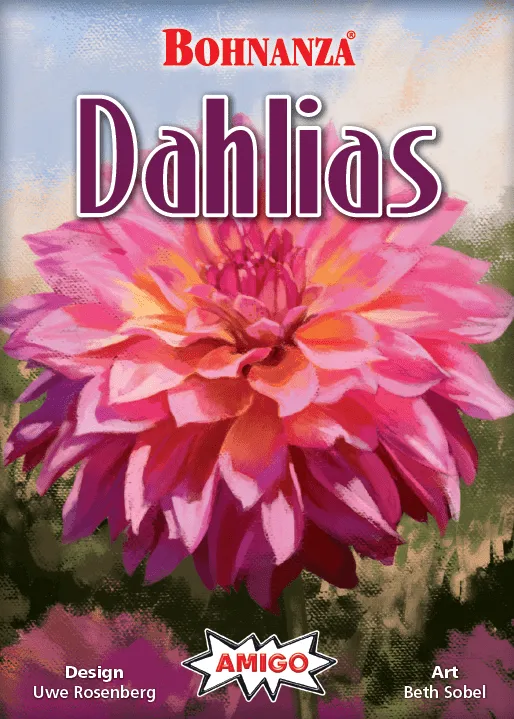
Bohnanza: Dahlias is a special edition of Bohnanza for 3-5 players that features the same gameplay as the original design. In the game, you plant, then harvest flower cards in order to earn coins. Each player starts with a hand of random flower cards, and each card has a number on it corresponding to the number of that type of flower in the deck. Unlike in most other card games, you can't rearrange the order of cards in hand, so you must use them in the order that you've picked them up from the deck — unless you can trade them to other players, which is the heart of the game. On a turn, you must plant the first one or two cards in your hand into the "fields" in front of you. Each field can hold only one type of flower, so if you must plant a type of flower that's not in one of your fields, then you must harvest a field to make room for the new arrival. This usually isn't good! Next, you reveal two cards from the deck, and you can then trade these cards as well as any card in your hand for cards from other players. You can even make future promises for cards received right now! After all the trading is complete — and all trades on a turn must involve the active player — then you end your turn by drawing cards from the deck and placing them at the back of your hand. When you harvest flowers, you receive coins based on the number of cards in that field and the "meter" for that particular type of flower. Flip over 1-4 cards from that field to transform them into coins, then place the remainder of the cards in the discard pile. When the deck runs out, shuffle the discards, playing through the deck two more times. At the end of the game, everyone can harvest their fields, then whoever has earned the most coins wins.

More Info
Keyflower

Keyflower

Time: 120 minPlayers: 2-6

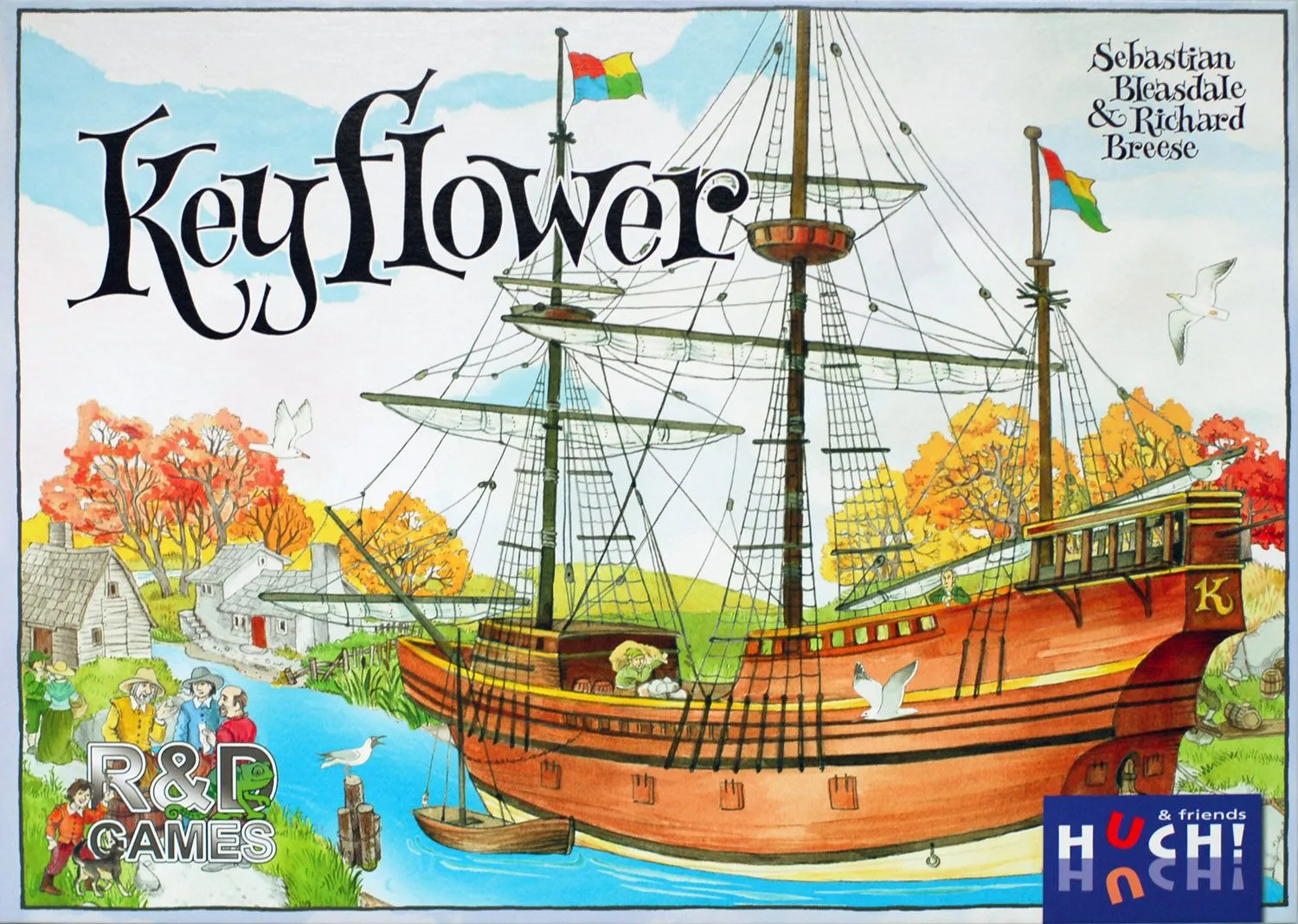
Keyflower is a game for two to six players played over four rounds. Each round represents a season: spring, summer, autumn, and finally winter. Each player starts the game with a "home" tile and an initial team of eight workers, each of which is colored red, yellow, or blue. Workers of matching colors are used by the players to bid for tiles to add to their villages. Matching workers may alternatively be used to generate resources, skills and additional workers, not only from the player's own tiles, but also from the tiles in the other players' villages and from the new tiles being auctioned. In spring, summer and autumn, more workers will arrive on board the Keyflower and her sister boats, with some of these workers possessing skills in the working of the key resources of iron, stone and wood. In each of these seasons, village tiles are set out at random for auction. In the winter no new workers arrive and the players select the village tiles for auction from those they received at the beginning of the game. Each winter village tile offers VPs for certain combinations of resources, skills and workers. The player whose village and workers generate the most VPs wins the game. Keyflower presents players with many different challenges and each game will be different due to the mix of village tiles that appear in that particular game. Throughout the game, players will need to be alert to the opportunities to best utilize their various resources, transport and upgrade capability, skills and workers. Keyflower, a joint design between Richard Breese and Sebastian Bleasdale, is the seventh game in the "Key" series from R&D Games set in the medieval "Key" land.

More Info
Hot Streak

Hot Streak

Time: 20 minPlayers: 2-8

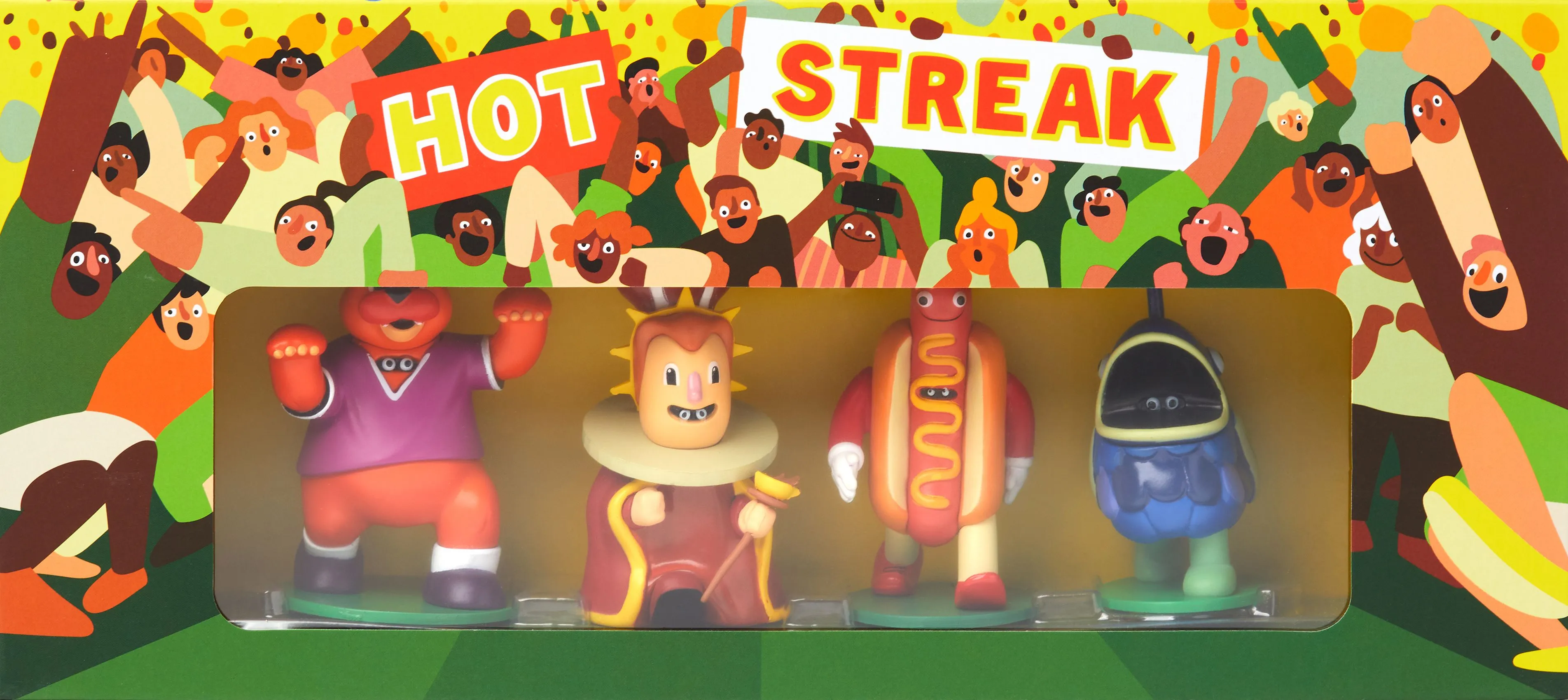
Hot Streak is a game for hard luck gamblers who love to bet on and scream at the racers, who in this case happen to be mascots who may (or may not) keep running in the right direction. At the start of the game, set up the racing deck with one card for each mascot and a number of random cards based on the player count. Reveal these cards to all players, after which players draft a betting ticket from those on display, then in reverse order draft a second bet. For each bet, you can play it safe — or flip it to the risky side, which might pay out more - or cost you money if you lose. After betting, each player chooses one of three cards in their hand to secretly add to the racing deck. Shuffle the deck, burn three cards, then reveal cards one by one from the deck, moving the mascots along the track, with them sometimes swerving into another lane and knocking over another racer, sometimes turning around, sometimes all moving at once, and sometimes just going backwards! If a racer runs off the track or would be knocked over while already fallen, they're disqualified. If needed, shuffle all cards in the deck, burn three cards again, and keep racing until all four spots on the box podium are filled. Pay out bets based on these results. For races #2-3, first deal each player a random card from the deck, then place bets again, then have each player contribute a card from their hand to the deck. After race #3, everyone tallies their money.

More Info
Savernake Forest

Savernake Forest

Time: 40 minPlayers: 2-4

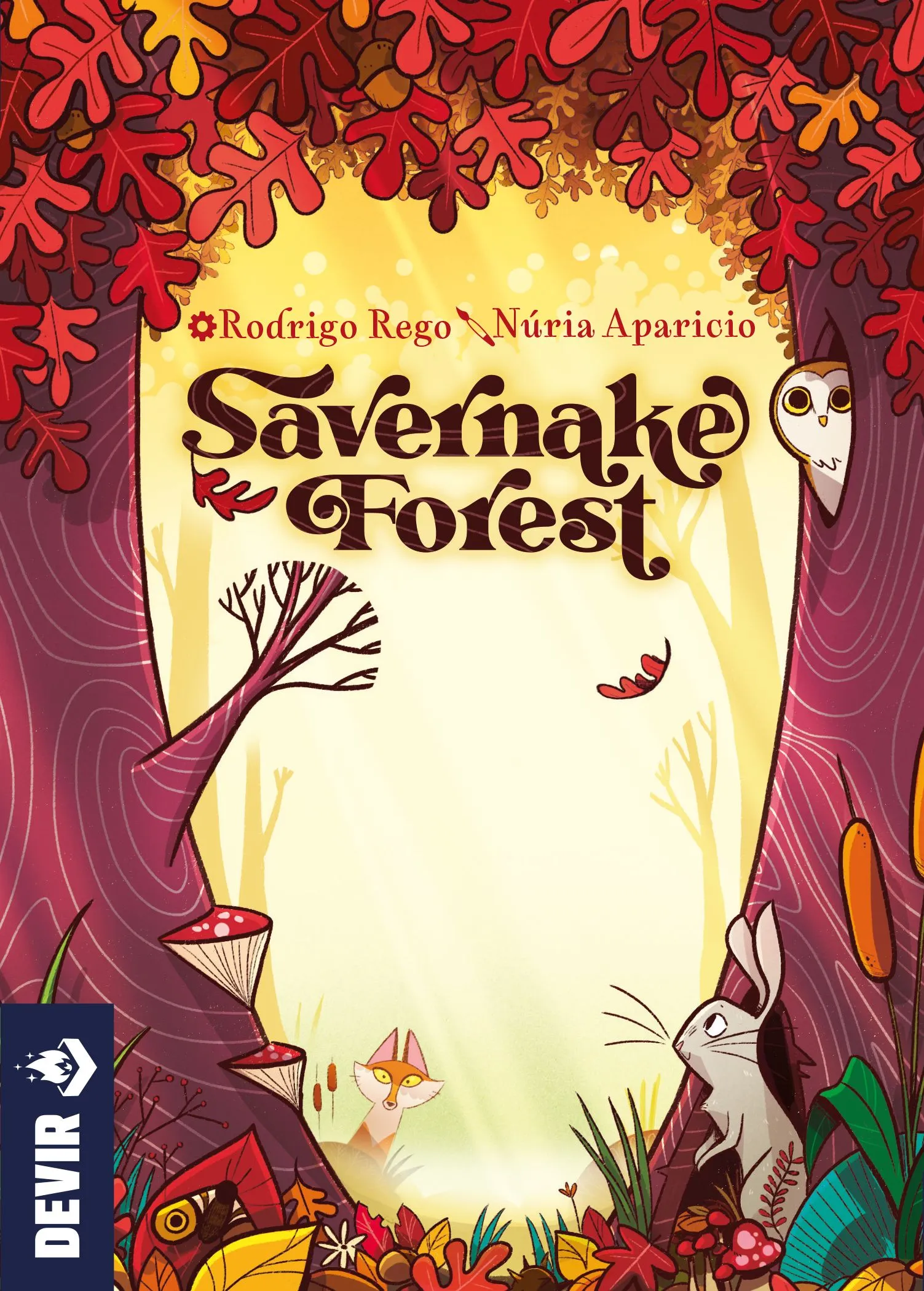
Autumn is coming to an end in the Savernake Forest… Help the animals gather and store food for the winter! Savernake forest is a game where 2-4 players build their own section of the forest with paths where animals and food will appear. To get the highest score, players must ensure that on each path the animals can collect their favorite food. Foxes, hedgehogs, beavers, owls, rabbits, woodpeckers, wild cats... Up to 23 different types of animals live together in the Savernake Forest. At the end of autumn, they all prepare to spend the cold winter with enough provisions and here you are to give them a hand… Or a paw! To play Savernake Forest you have two decks of square cards, one showing the animals and the other with forest paths full of succulent food. Each player is randomly given an animal card, showing how many foods they can store and their preferences. For example, the fox loves eggs, but not berries or nuts. To get the best score, you must try to get each animal to collect its favorite foods. During setup, three road cards and one animal card are laid out for all players to see. Each player, on his turn, will choose one of them and add it to his forest, always respecting three rules: there can never be two animals on the same path; cards must be adjacent and no cards can be placed outside of a 4x4 grid. The game ends when all participants have completed their forest, with a total of 16 cards. Throughout the game, players will have the help of some animals, depending on the card they choose from the central market. The rooster will help you get up early, so you can be the first to choose a card in the next turn. The armadillo teaches you how to dig better shelters to store more food, so you can take a burrow token and add it to one of your animal cards to increase that animal's storage capacity by 1. The goat teaches you to hydrate yourself better, offering a water drop token that can be associated with a food and increase its value by 1. Finally, the rabbit helps you attract new animals to your forest. For players looking for more advanced challenges, the rulebook includes a two-player variant with some modifications that increase the difficulty. Quite a boost if you already master the basic rules! With a dreamy art, Savernake Forest offers a perfect balance between fun and strategy that makes it perfect for any type of playgroup. Family and friends will have a great time helping the animals of the forest, while trying to make the most of their paths to reach the highest score. Stroll through Savernake in the fall and be swept away by the enchantment of its wildlife! —description from the publisher

More Info
Kahuna

Kahuna

Time: 40 minPlayers: 2-2

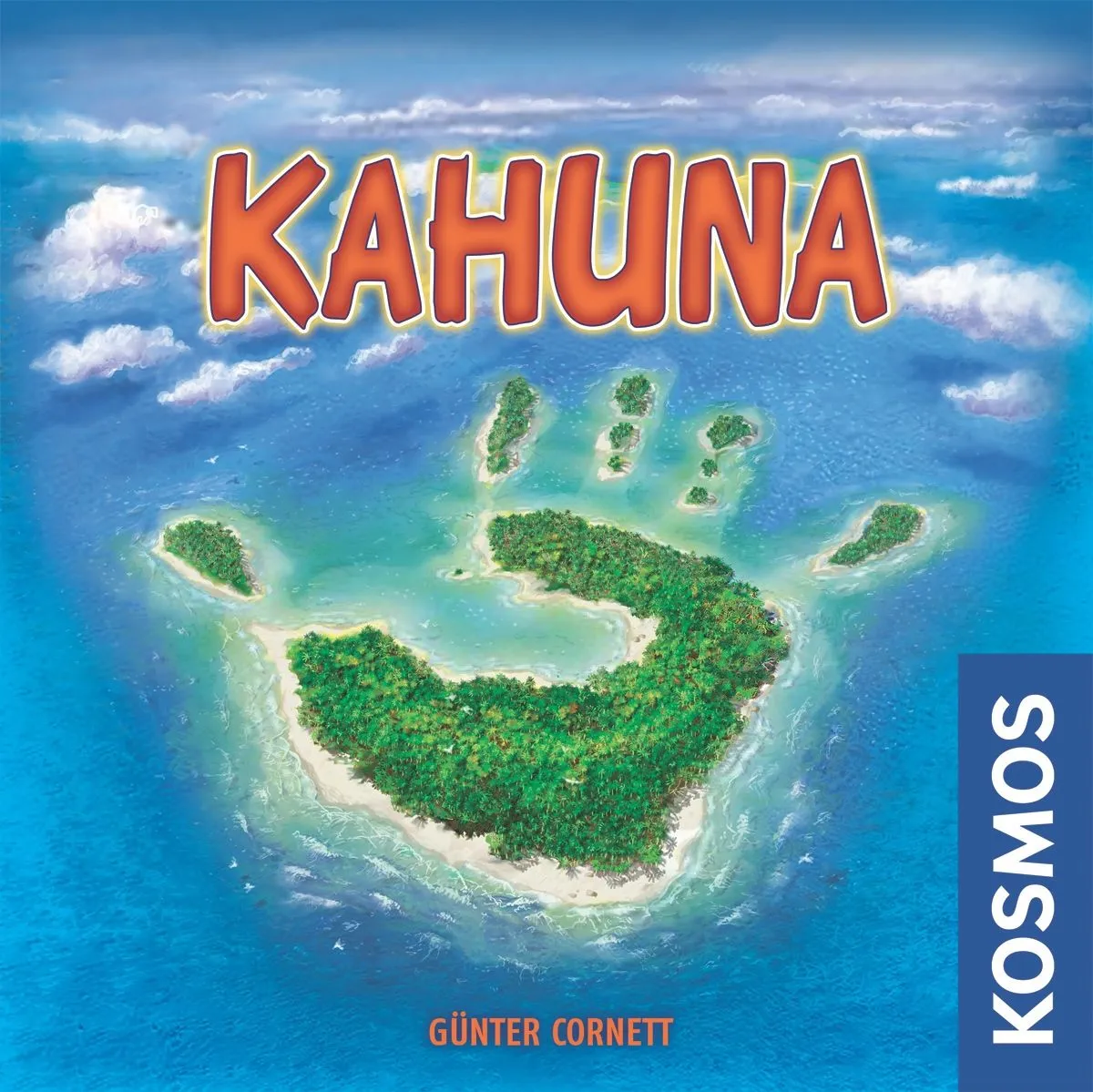
"Who will rule the South Seas? Two Kahuna - ancient sorcerers of the Pacific - compete for dominance on an archipelago consisting of twelve small islands. Using their magic and wisdom, they struggle for control of the islands. They anxiously await the cards handed to them by fate. But when the time is right, they move to capture one, two, or even more islands, trying to gain the upper hand. At the mercy of the magical powers of the South Seas, they quickly realize that even the best magic is no good without strategy." Originally published in 1997 as Arabana-Ikibiti by the designer's own publisher Bambus Spieleverlag, then reprinted by Funagain in the U.S., Kosmos' Kahuna – part of its Kosmos two-player series – is the best known implementation of this design. It's a two-player game, played on a board depicting twelve islands. Players use cards to place bridges between these islands or remove opponent's bridges. If you get the majority of bridges around an island, you place one of your marker stones on it and also remove any of your opponent's bridges to that island – which might cause them to lose a bridge majority on an adjacent island and lose a marker stone there. The game is played in three rounds. A round ends when all cards from the face down deck and the three face up cards have been taken. Then points are scored for the islands with a marker stone on them. The game can also end sooner when one player has absolutely NO bridges left on the board. The Kosmos edition has excellent graphics and nice wooden pieces and plays very well. Reimplements: Arabana-Ikibiti Reimplemented by: Kanaloa

More Info
Dead Last

Dead Last

Time: 60 minPlayers: 6-12

Stay alive, gain a fortune... Dead Last — originally known as Tontine — is a "social collusion" game of shifting alliances, betrayals, and murder for profit in which players must conspire and vote upon whom to kill each round. Any means of overt or covert communication is allowed — a glance, a nod, pointing under the table, flashing a card, anything – but make sure you don't tip off the target or they could ambush you instead! In the end, one or two players will remain, either claiming all the gold or squaring off in a final showdown before starting the next round of play. The first player to score 24 points of gold wins. Thematically, the inspiration for the game is one of the oldest pulp fiction/detective novel tropes: the Tontine, a financial investment that accrues, but pays out only to the last surviving member of the group. This practice is now largely illegal as it famously had the tendency to lead to murder. But it is the subtle art of communication that delivers the fun of the game and you conspire with each other. If you are the target of the most votes, you're dead, and if you did not side with the popular vote, you are also dead, so you constantly have to stay informed or deceive your target to band together without letting the target know. Wink, smile, kill — that's the whole game. As soon as someone asks, "Hey, wanna play Dead Last?", the game has already begun — and if you don't know who the target is, it very well could be you...

More Info
Don't Mess with Cthulhu

Don't Mess with Cthulhu

Time: 30 minPlayers: 4-6

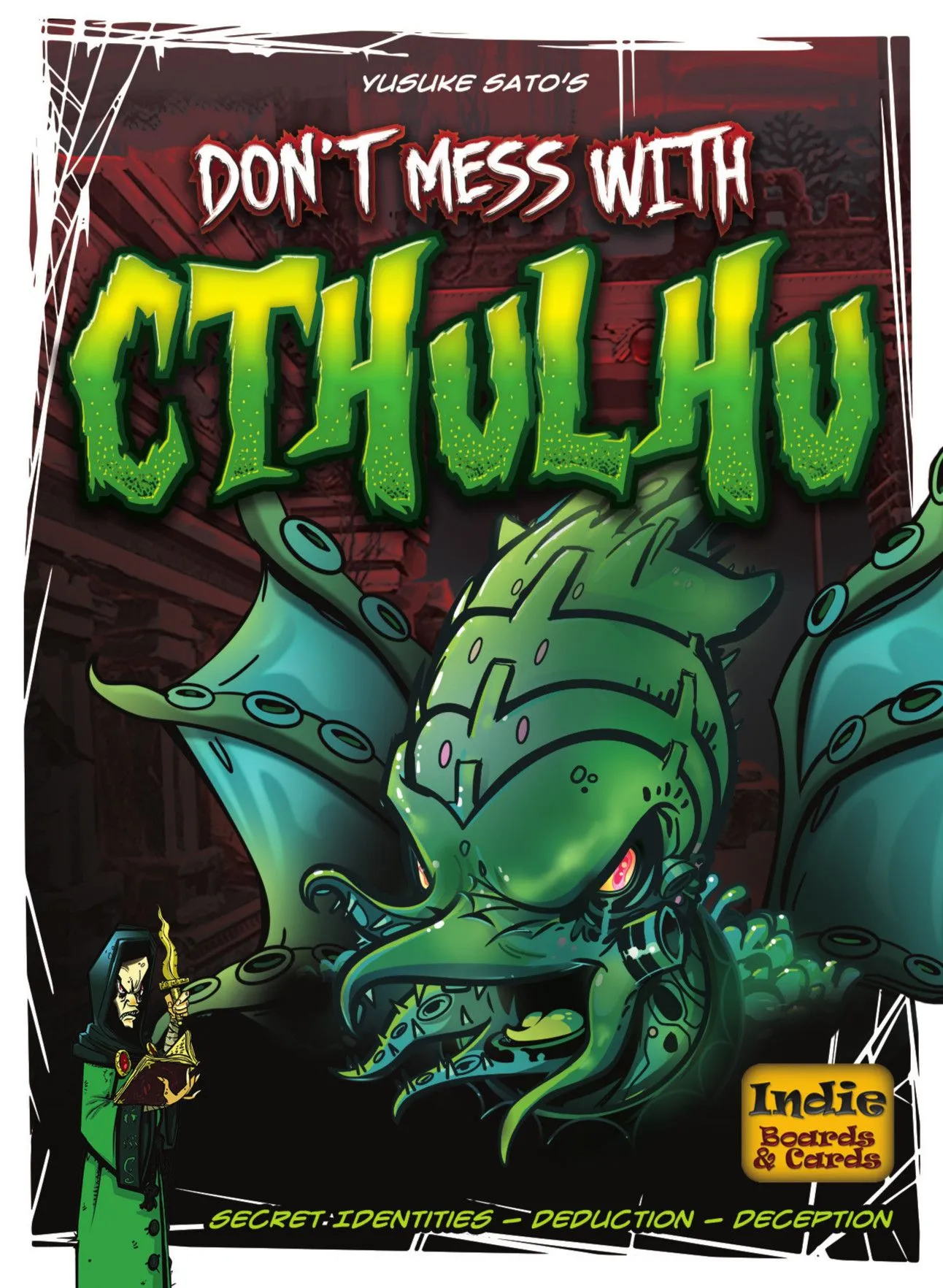
Don’t Mess with Cthulhu is a social deduction game with secret identities. Players are either Investigators trying to keep Cthulhu from waking and controlling the world, or Cultists that want to bring the world to a disturbing end. The game takes place over four rounds. The Investigators must uncover all the Elder Signs to win; the Cultists win when Cthulhu is revealed or if the game ends before all the Elder Signs are discovered. Before each round players receive a number of Investigation cards, which they look at but then shuffle and put in front of themselves so they know what cards they have, but they don't know which card is which. Each round has a number of actions equal to the number of players in the game. Players take actions to reveal Investigation cards, and gather all unrevealed cards are shuffled an redistributed evenly among the players. Reveal Cthulhu, and the Cultists win instantly. Reveal all the Elder Signs, and the Investigators win. If you want to play multiple rounds (it's highly recommended), the losers in each game get Insanity tokens. Get three tokens, and the night is over with the winner(s) being those most sane. Kickstarter version notes: Kickstarter Edition has the following bonuses, unavailable in the retail version: #1 - 10 player aupport. All the components needed to play with up to 10 people at the same time. #2 - 3 x Necronomicon Investigation cards. Now the Investigators not only have to discover all the Elder Signs in time to prevent Cthulhu from rising, they must also discover the ancient tomes called Necronomicon. But the Necronomicon are dangerous to the uninitiated and cannot be revealed until at least one Elder Sign has been discovered. These promo cards add more information into the game, helping the Investigators in their quest. However the Necronomicon also give the Cultists another win condition - making the strategies more complex and the discussion even more lively. #3 - 6 x "Objects of Power" cards. These special cards have a variety of different uses, and provide more direct and indirect information in the game (as well as a touch of light-hearted fun). Objects of Power give the game more replay value, more strategy and more variability without adding complexity. Timebomb Themed edition In TimeBomb, you are playing either a terrorist trying to make a bomb blow up, or a SWAT team member trying to defuse it. Each player receives a card at the beginning of the game that indicates his role and keep it secret until the end of the game. Then, at each of the game's 4 rounds, each player receives 5 cards that he shuffles after having a quick look at them and place them face down in front of him. Among all of the player's cards, a number of "SUCCESS" cards, one "BOOM" card and the rest being "SAFE" card. The active player then chooses another's player card and reveals it, that player then becoming the new active player. After N cards have been revealed (N being the number of players), all cards are shuffled again and distributed equally to the players for a new round. If at any time the "BOOM" card is revealed, the terrorist's team wins. If all "SUCCESS" cards are revealed before that happens, then the SWAT team members win. Will you be able to convince the other player to reveal your own cards among them a SUCCESS is hidden ? Or are you just trying to cheat the SWAT team members into revealing your own cards because the BOOM card is among them ? Only a game of TimeBomb will say.

More Info
Scout

Scout

Time: 20 minPlayers: 2-5

SCOUT is a ladder-climbing game in which cards have two potential values, players may not rearrange their hand of cards, and players may pass their turn to take a card from the current high set of cards into their hand. More specifically, cards are dual-indexed, with different values on each half of the card, with the 45 cards having all possible combinations of the numbers 1-10. During set-up, whoever is shuffling the cards should randomize both the order of the cards in the deck and their orientation. Once each player has been dealt their entire hand of cards, they pick up that hand without rearranging any of the cards; if they wish, they can rotate their entire hand of cards in order to use the values on the other end of each card, but again they cannot rearrange the order of cards in their hand. On a turn, a player takes one of two actions: • Play: A player chooses one or more adjacent cards in their hand that have all the same value or that have values in consecutive order (whether ascending or descending), then they play this set of cards to the table. They can do this only if the table is empty (as on the first turn) or the set they're playing is ranked higher than the set currently on the table; a set is higher if it has more cards or has cards of the same value instead of consecutive cards or has a set of the same quantity and type but with higher values. In this latter case when a player overplays another set, the player captures the cards in this previous set and places them face down in front of themselves. • Scout: A player takes a card from either end of the set currently on the table and places it anywhere they wish in their hand in either orientation. Whoever played this previous set receives a 1 VP token as a reward for playing a set that wasn't beaten. Once per round, a player can scout, then immediately play. When a player has emptied their hand of cards or all but one player have scouted instead of playing, the round ends. Players receive 1 VP for each face-down card, then subtract one point for each card in their hand (except if they were the player scouted repeatedly to end the game). Play as many rounds as the number of players, then whoever has the most points wins.

More Info
KuZOOka

KuZOOka

Time: 45 minPlayers: 2-6

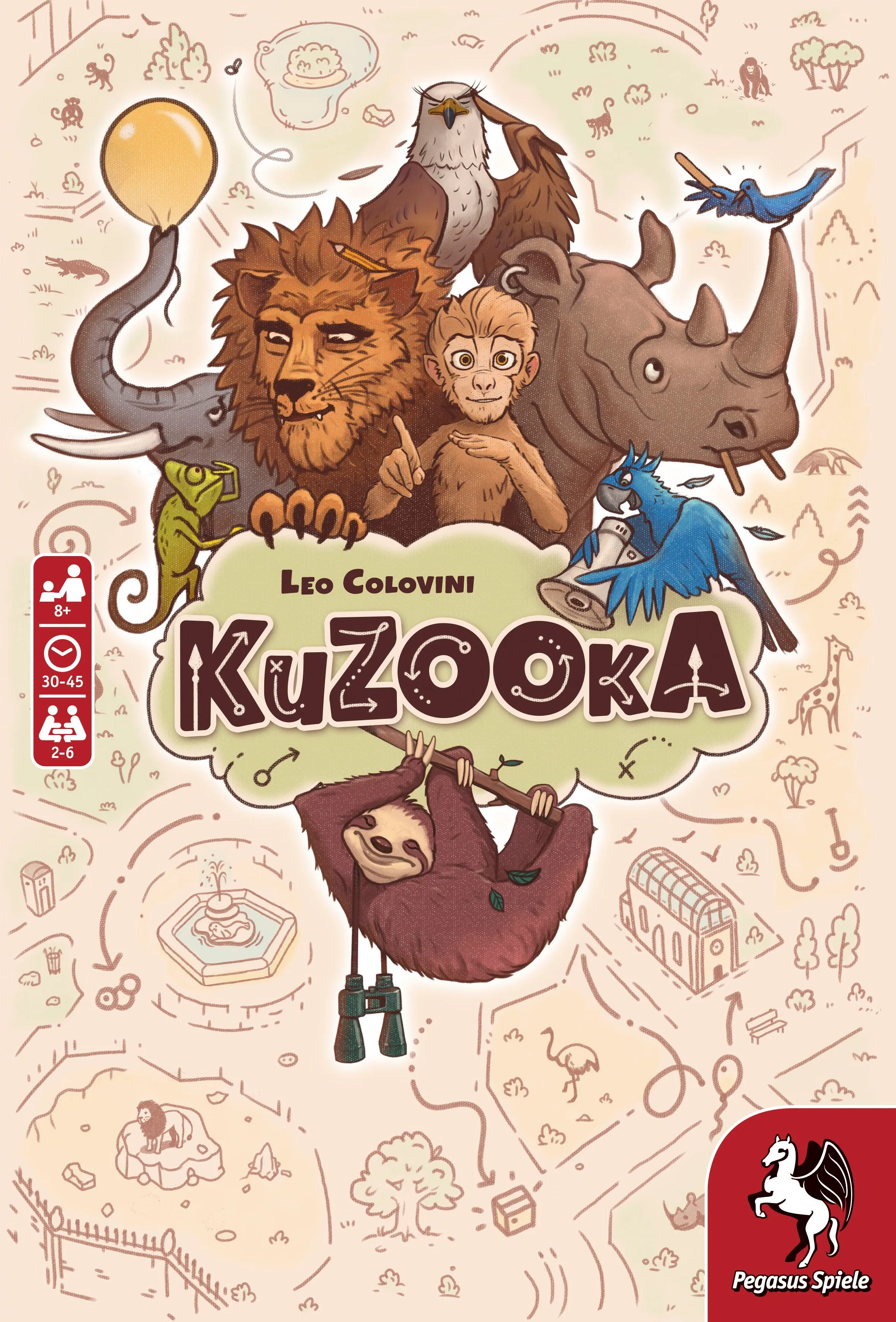
It isn't easy being a zoo animal. The enclosures are far too small for your needs, the daily routine is boring, and the visitors to the zoo are too obnoxious. You have decided: You need to break out of the zoo, ideally within the next seven days. There are multiple ways to escape in KuZOOkA, but you need to work together with the other animals — in secret — to pool the trash left behind by zoo visitors and develop an escape plan that makes use of these items. Each player has one of the ten animal cards with a unique power, and you play on a game board that features a path comprised of spaces in six colors, with each space having a number in it. In each round, a number of item cards is dealt out to players, with 20-22 cards being dealt in the first round. Cards show a colored item, e.g., a red ice cream spoon or a purple scarf. On a turn, you place one of your animal tokens on the path farther than any other animal token, say, in the 1 red space or the 2 purple space, to give some indication of what you have in hand. (The first player is limited to one of the first five spaces.) The next player places one of their tokens farther down the path, and so on, with each placement giving players a chance to suggest what cards they hold in hand. A player can use their animal power once during a round. At some point a player will decide that instead of placing an animal token, it's time to attempt an escape. At that point, all players reveal all cards of the color matching the location of the animal token furthest down the path. If you have more cards, you gain experience stars equal to the number depicted on that space — and with experience stars, you can purchase a higher starting experience level, which means you'll have more cards in play, including face-up cards visible to all. If you have exactly as many cards as the number depicted, you gain experience stars as well as a universal tool card that counts as a joker. If you have fewer cards, you fail. Shuffle all cards, then deal out the current number of cards and start a new round. If during a round you manage to reach one of the six final spaces on the track and you have at least that many cards of the designated color, you escape and win the game. If you fail to do this by the end of the seventh round, you lose. You can increase the difficulty of KuZOOkA by requiring more stars to advance in experience level or by playing on the opposite side of the game board, which requires you to win universal tools in order to succeed in the final six spaces.

More Info
Welcome to the Dungeon

Welcome to the Dungeon

Time: 30 minPlayers: 2-4

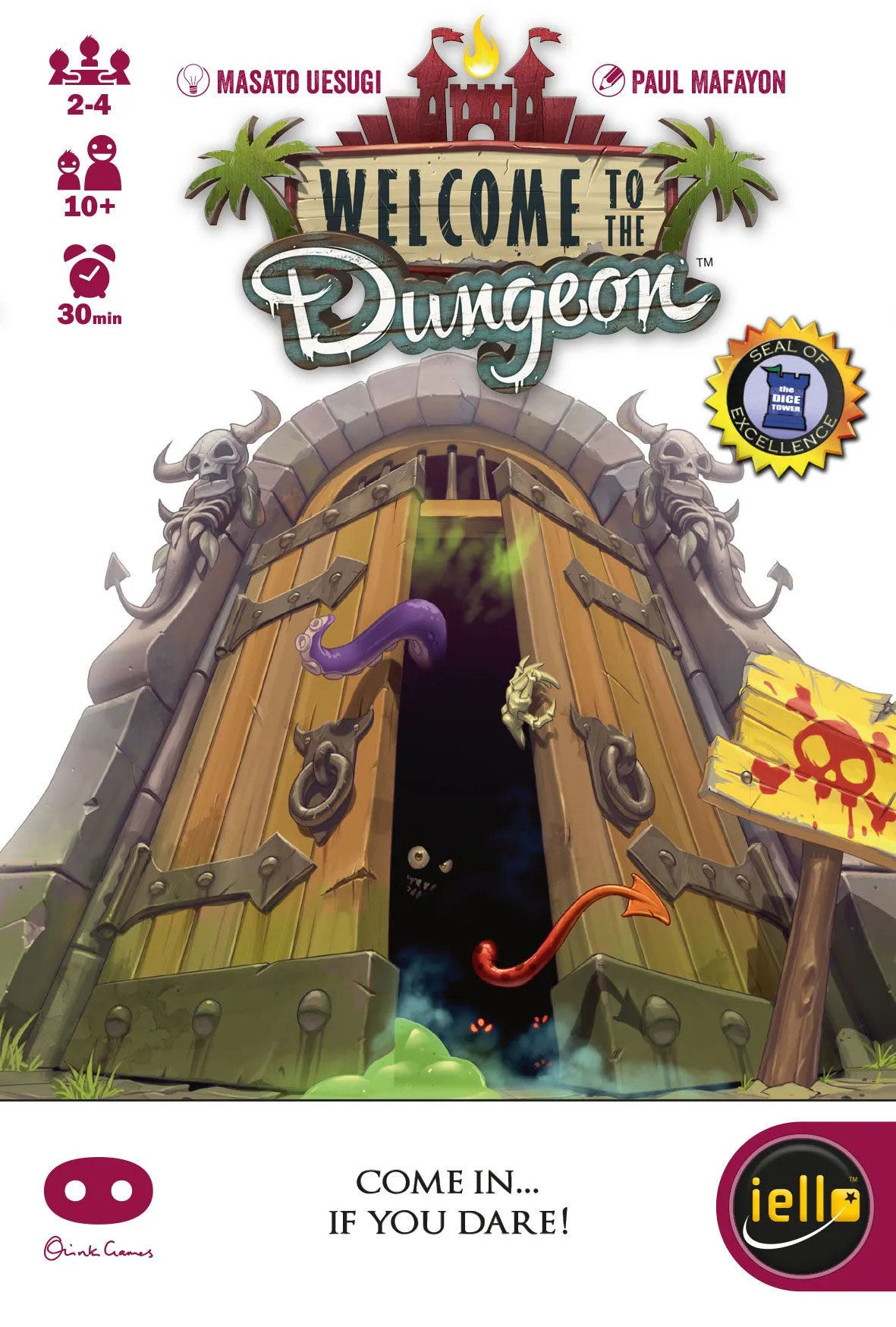
Welcome to the Dungeon — first released as Dungeon of Mandom — is a push-your-luck dungeon delve in which 2-4 players take turns essentially daring each other to go into a dungeon with less equipment than they start off with while filling the dungeon with monsters. Players can win the game by winning 2 rounds or get eliminated from the game by losing 2 rounds. Each player has a 2-sided players card that has a white side and a red side. The first win taps the player card and the 1st loss flips the card over to the red side. A 2nd loss will have the player turn the card back into the box. The game is played in rounds. The player sets up the base character and all the equipment equipped. This represents every player as a fully equipped dungeon delver. Each round, the start player (the person who challenged the dungeon last or the last player to be in a dungeon) can choose to draw a card from the monster deck or pass their turn. If they choose to draw, they can do one of two things: (1) keep it and de-equip an equipment or (2) place it face down in the dungeon. Placing it face down in the dungeon creates the dungeon deck and fills the dungeon with monsters that the challenger will have to face later. If they choose to pass their turn, they cannot participate in the rest of the round. Once only one person is left after all the other players have passed their turn, that player then becomes the challenger and must go into the dungeon with only the equipment he has equipped. The player then flips cards off the dungeon deck and fights the monsters within. Some equipment allow you to null the enemy damage or be able to withstand it by increasing your HP. If the player survives the dungeon with at least 1 HP, they win that round. If not, they lose. The players then reshuffles all the cards to make a new monster deck and re-equips all the equipment to start a new round. The game ends when someone has won twice or one player is the last man standing. Welcome to the Dungeon includes four different sets of character cards whereas Dungeon of Mandom has only a single character.

More Info
Celestia

Celestia

Time: 30 minPlayers: 2-6

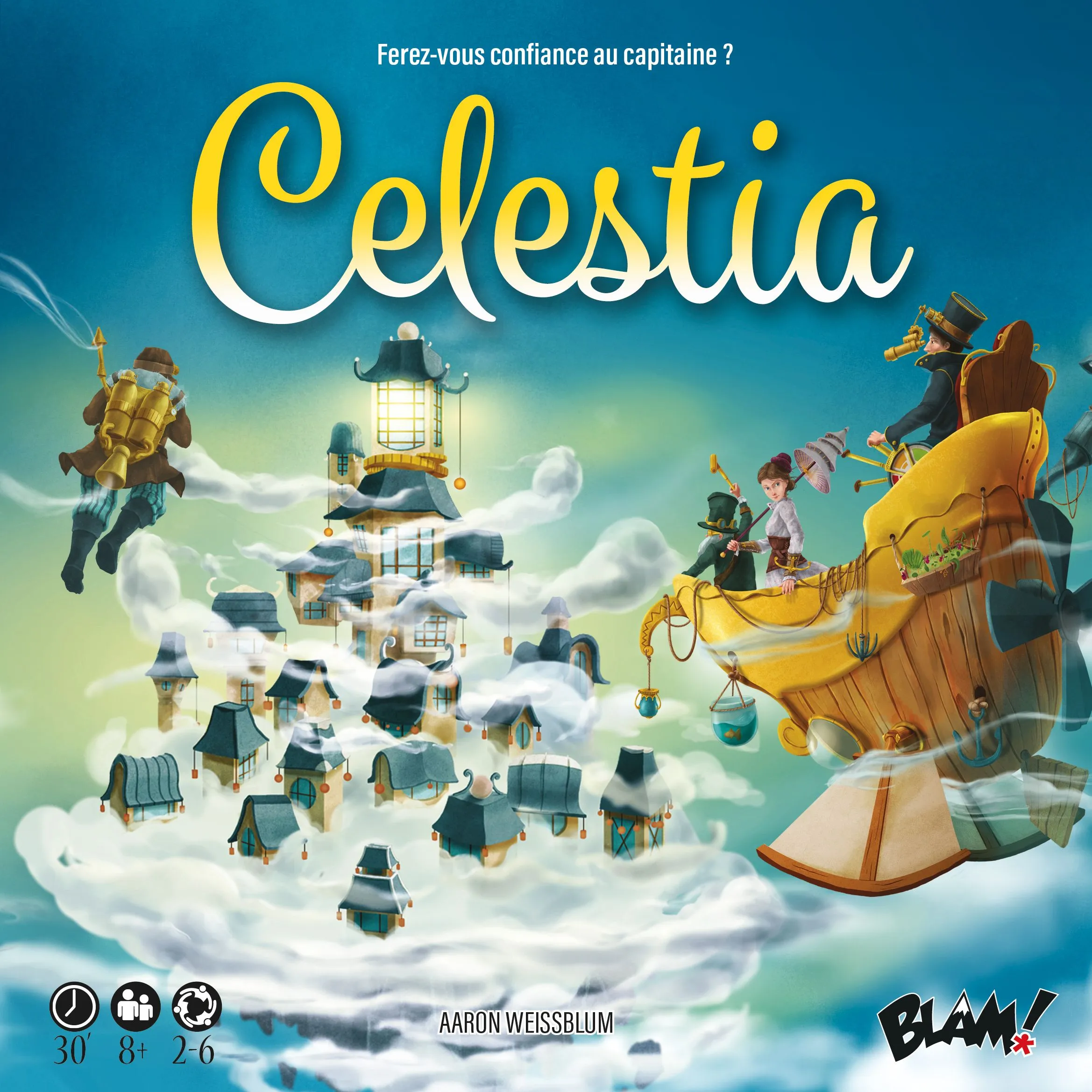
In Celestia, a revamped version of Cloud 9, you board an aircraft with a team of adventurers to perform many trips through the cities of Celestia and recover their wonderful treasures. Your journey will not be safe, but you will attempt to be the richest adventurer by collecting the most precious treasures! At the beginning of a journey, all players place their pawns within the aircraft; the players start the game with six cards in hand (or eight depending on the number of players). At the beginning of each round, one player is chosen to be the captain of the trip and he rolls 2-4 dice to discover the challenges that they will face: fog, lightning bolts, killer birds, or pirates. He must then play the appropriate cards — a compass, a lightning arrester, a foghorn, or even cannons — to continue on the journey and reach the next city. But before the captain plays the appropriate cards, each player must decide whether to stay within the aircraft: If you exit, you're guaranteed the victory points that come from exploring the current city. If you stay on board, you hope to make it to the next city in order to catch more precious treasures. If the captain can't overcome the challenge, though, everyone comes crashing down empty-handed and you'll need to begin a new trip with all passengers on board. During the journey, each adventurer can try to pull out of the game with fabulous objects (a jetpack, astronomy glasses, etc.) or by changing the trip (modifying the travel or abandoning an explorer in the city). As soon as a player earns treasure worth at least fifty points, the game ends and this player wins.

More Info
Tsuro of the Seas

Tsuro of the Seas

Time: 40 minPlayers: 2-8

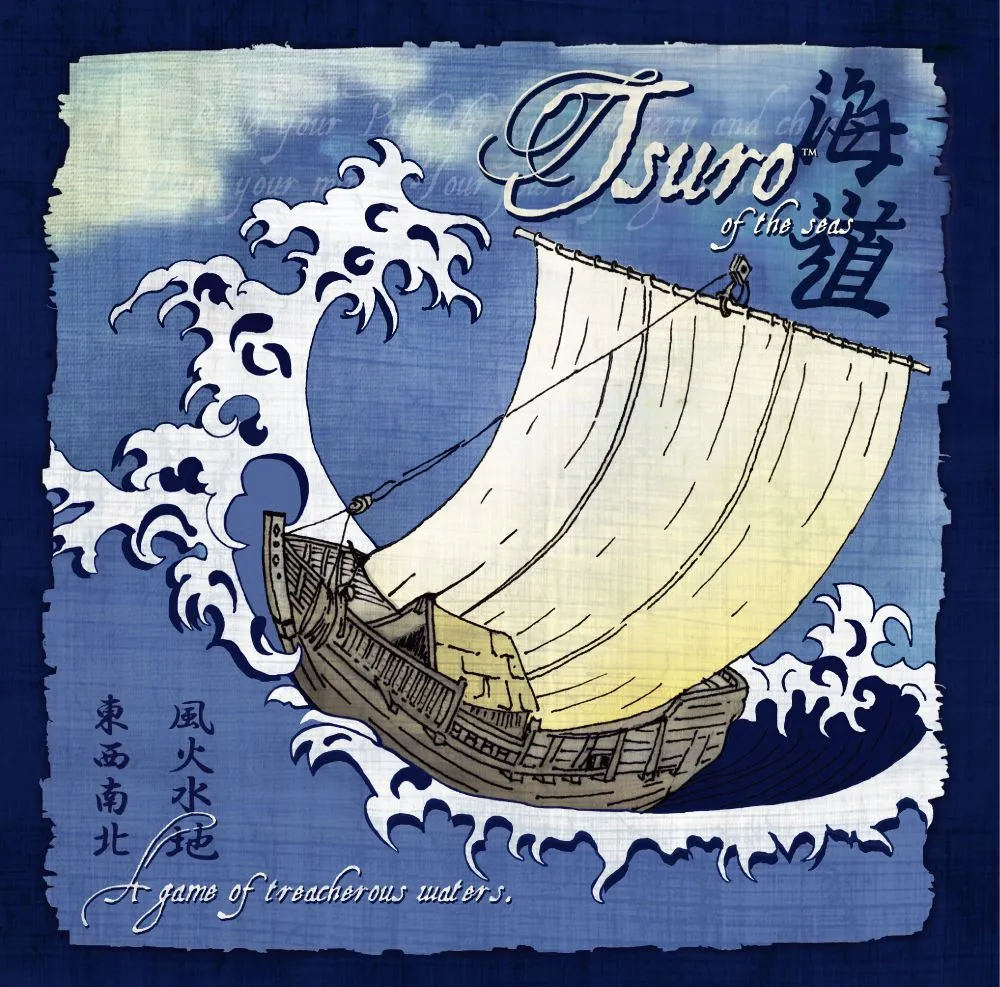
The basic game play of Tsuro of the Seas resembles that of Tom McMurchie's Tsuro: Players each have a ship that they want to sail — that is, keep on the game board — as long as possible. Whoever stays on the board the longest wins the game. Each turn players add "wake" tiles to the 7×7 game board; each tile has two "wake connections" on each edge, and as the tiles are placed on the board, they create a connected network of paths. If a wake is placed in front of a ship, that ship then sails to the end of the wake. If the ship goes off the board, that player is out of the game. What's new in Tsuro of the Seas are daikaiju tiles, representing sea monsters and other creatures of the deep. Notably, daikaiju can move: each tile has five arrows, four for moving in each of the cardinal directions and another one for rotation. On the active player's turn, he rolls two six-sided dice; on a sum of 6, 7, or 8, the daikaiju will move, while on any other sum they'll stay in place. To determine which direction the daikaiju tiles move, the player then makes a second roll, this time with a single die. On 1-5 in the second roll, each daikaiju moves according to its matching arrow. On a 6 in the second roll, a new daikaiju tile is added to the board. If a daikaiju tile hits a wake tile, a ship, or another daikaiju tile, the object hit is removed from the game. Another way to be ousted! The more daikaiju tiles on the game board, the faster players will find themselves trying to breathe water...

More Info
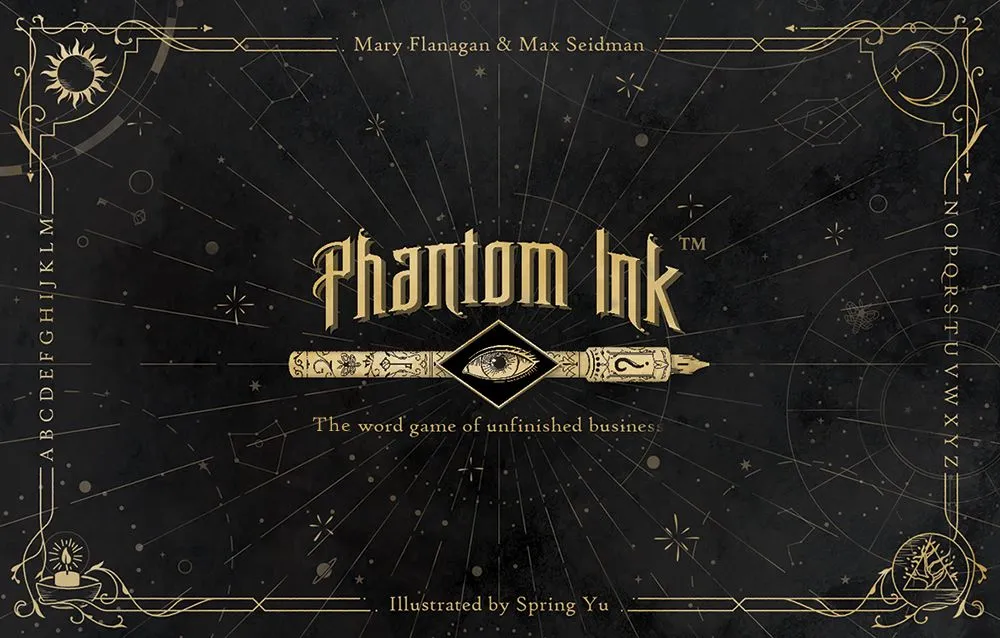
Phantom Ink

Phantom Ink

Time: 15 minPlayers: 2-8

Renowned mediums are competing to figure out a secret object and prove they can connect with the "World Beyond". The first team to figure out the secret object wins! To set up Phantom Ink, divide players so that the Sun team and the Moon team each have one Spirit and up to three Mediums. The mediums on a team share a hand of seven question cards, and the spirits begin the game by choosing one of the five objects on a card as the secret object. On a turn, the mediums pass two question cards to their spirit, with sample questions like "What color is it most commonly?", "What fictional character has it or uses it?", and "If it were a musical instrument, what would it be?" The spirit discards one question card face up, then returns the question card it's going to answer to their mediums, then slowly writes the answer one letter at a time for all to see. As soon as the mediums think they know what this clue word is, they yell "Silencio", and the spirit stops writing. The other team of mediums might see only the letter "Y", but if you know the question is "What color is it?", then you know the clue must be "yellow". To end your turn, draw two new question cards. On a turn, instead of handing over question cards, you can attempt to guess the answer — and to do so you write like the spirits, one letter at a time. If you write an incorrect letter, the spirits will stop you, marking out your error, with your partial guess giving the other team more information. If you guess the entire word correctly, you win! Awards & Honors: Game Makers Guild - Seal of Approval The Dice Tower - Seal of Approval

More Info
Cockroach Poker

Cockroach Poker

Time: 20 minPlayers: 2-6

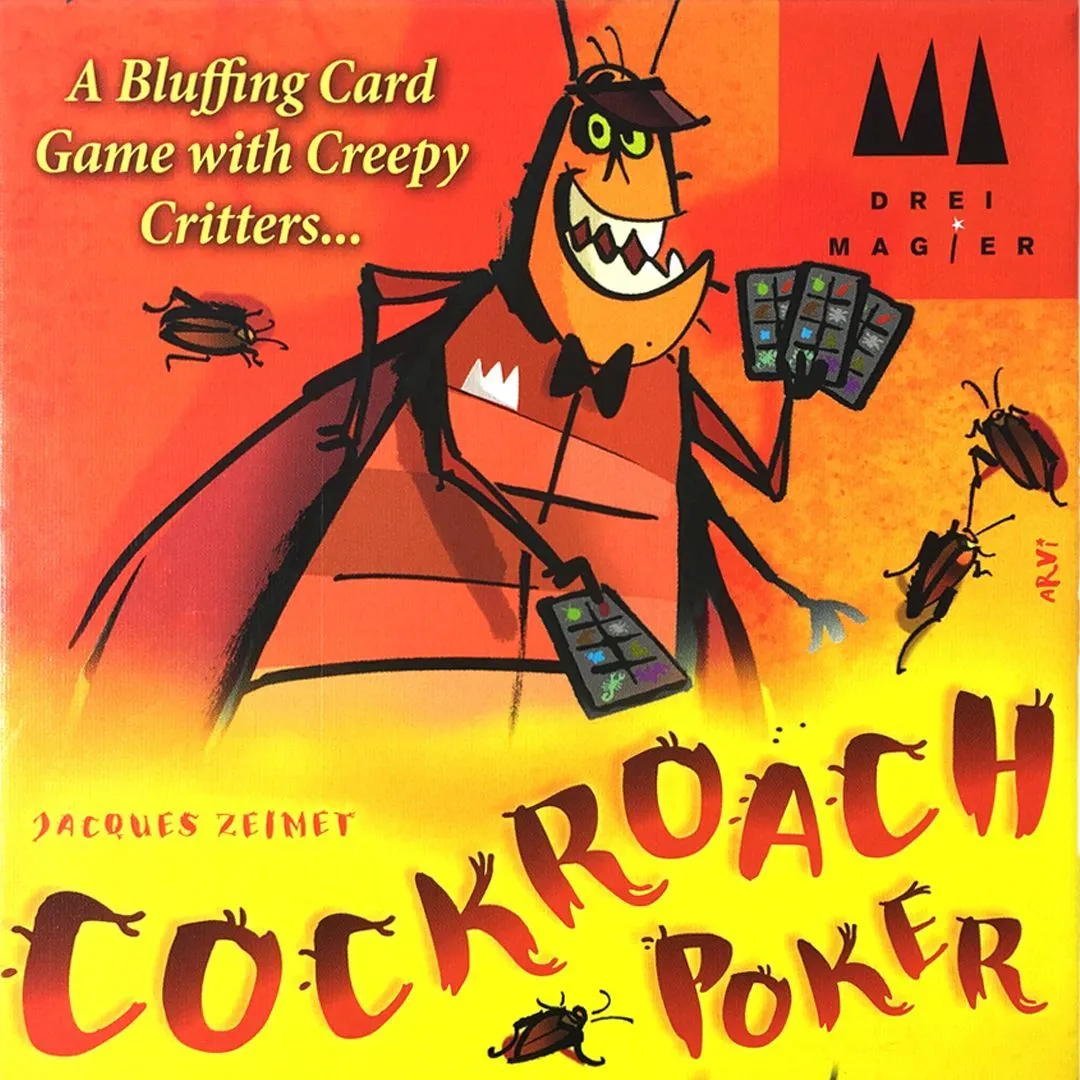
Cockroach Poker is a reverse set collection game that has nothing to do with poker – except that the game is all about bluffing, with cards that show cockroaches, rats and stink bugs. The goal is to force another player to collect 4 of any one type of critter. The deck includes 64 cards, with eight copies of eight types of critters. To set up the game, shuffle the deck and deal the cards out to players. On a turn, a player takes one card from their hand, lays it face down on the table, slides it to a player of their choice, and declares a type of critter, e.g., "Stink bug". The player receiving the card either Accepts the card, says either "true" or "false", then reveals the card. If this player is wrong in their claim, they keep the card on the table in front of them face up; if they are right, the player who gave them the card places it face up before them. Peeks at the card, then passes it face down to another player, either saying the original type of critter or saying a new type. This new player again has the choice of accepting the card or passing it, unless the card has already been seen by all other players in which case the player must take the first option. Whoever lost a challenge and had to place the card before them on the table begins the next round. The game ends when a player has no cards to pass on their turn or when a player has four cards of the same critter on the table in front of them. In either case, this player loses and everyone else wins.

More Info
6 Nimmt!

6 Nimmt!

Time: 45 minPlayers: 2-10

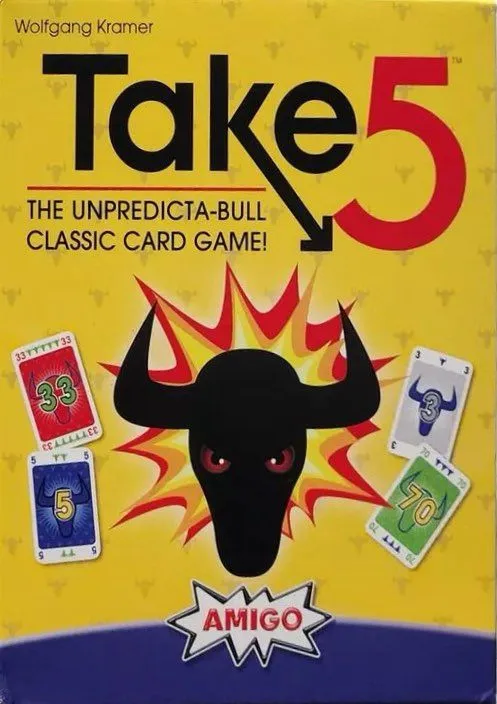
In Take 5, a.k.a. 6 nimmt!, Category 5 and many other names, you want to score as few points as possible. To play the game, you shuffle the 104 number cards, lay out four cards face-up to start the four rows, then deal ten cards to each player. Each turn, players simultaneously choose and reveal a card from their hand, then add the cards to the rows, with cards being placed in ascending order based on their number; specifically, each card is placed in the row that ends with the highest number that's below the card's number. When the sixth card is placed in a row, the owner of that card claims the other five cards and the sixth card becomes the first card in its row. In addition to a number from 1 to 104, each card has a point value. After finishing ten rounds, players tally their score and see whether the game ends. (Category 5 ends when a player has a score greater than 74, for example, while 6 nimmt! ends when someone tops 66.) When this happens, the player with the fewest points wins! 6 nimmt! works with 2-10 players, and the dynamics of gameplay change the more players that you have. One variant for the game has you use only the lowest 34 cards, 44 cards, 54 cards, etc. (instead of all 104 cards) when you have three, four, five, etc. players. This change allows you to know exactly which cards are in play, thereby allowing you to track which cards have been played and know what to expect so that you can (theoretically) make better choices as to which card to play when.

More Info
Bonsai

Bonsai

Time: 40 minPlayers: 1-4

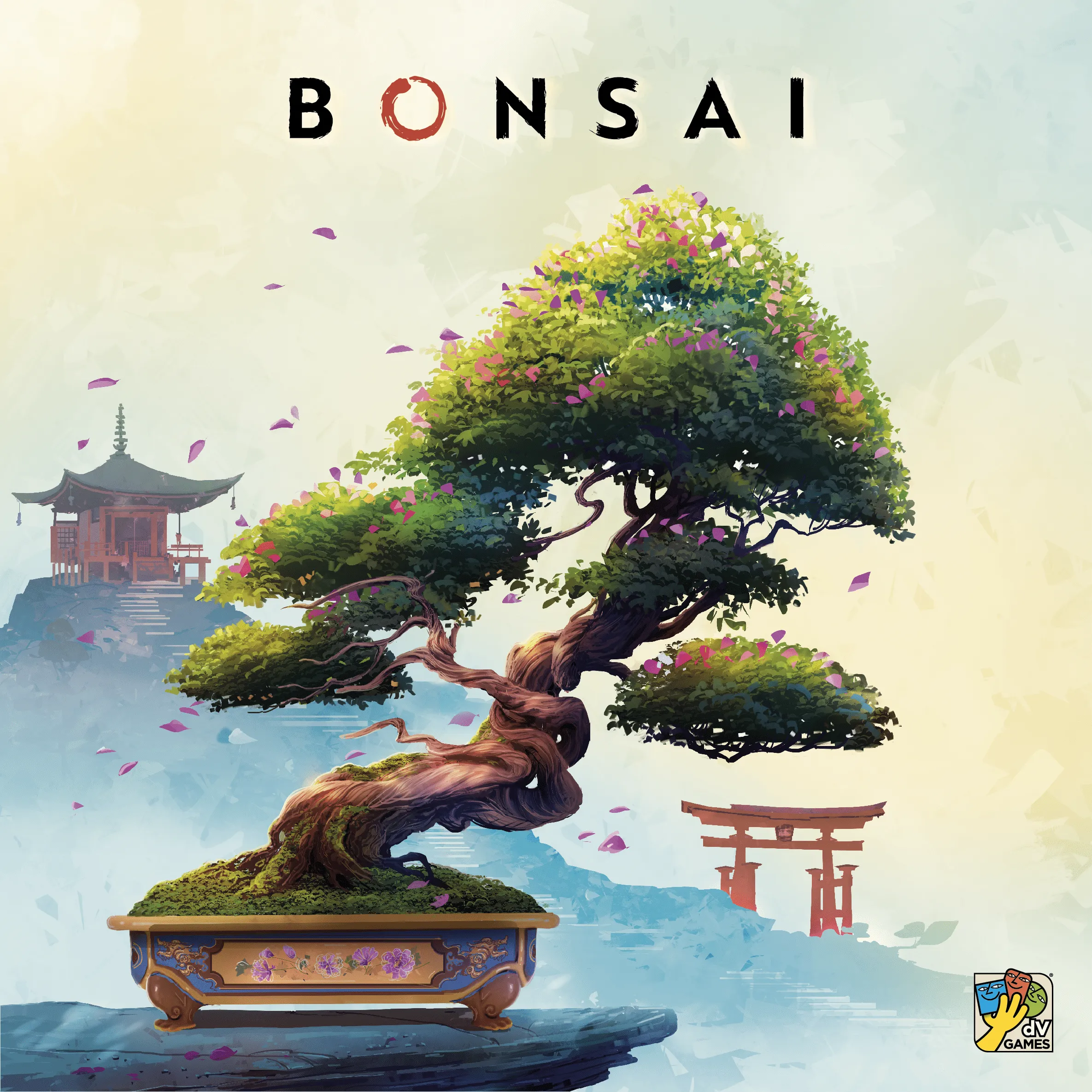
The Japanese term "bonsai" means "planted in a pot". A bonsai is a living work of art, a perfect miniature plant, identical in all respects to its full-size simile, but several times smaller. In Bonsai, players take on the role of expert bonsai masters intent on growing their own bonsai. Whoever grows the best plant will be appointed to show their Bonsai at the Imperial gardens. On your turn, choose and perform one of these two actions: meditate or cultivate. If you meditate, choose one of the face up cards on the board and take it, along with any Bonsai tiles represented below the card you draw. If you cultivate, you can place in your Bonsai the tiles which are in your personal supply. You can place as many tiles as the total symbols depicted on your Seishi tile and any or all of your Growth cards. Each symbol will let you place one tile of the corresponding type. During the turn in which your bonsai matches or exceeds the requirements of a Goal tile that is still in the middle of the table (i.e., the Goal tile has not been claimed yet by any player), you must immediately choose whether you want to claim that tile or if you want to renounce it in order to try to achieve a harder Goal tile. When the last card from the deck is revealed, the game end is triggered. Each tile in your bonsai is worth a certain number of points. In the solo game you can try the Additional Scenarios that change some rules and goals, and eventually try to beat the Emperor Challenge. —description from the publisher

More Info
Azul: Summer Pavilion Mini

Azul: Summer Pavilion Mini

Time: 45 minPlayers: 2-4

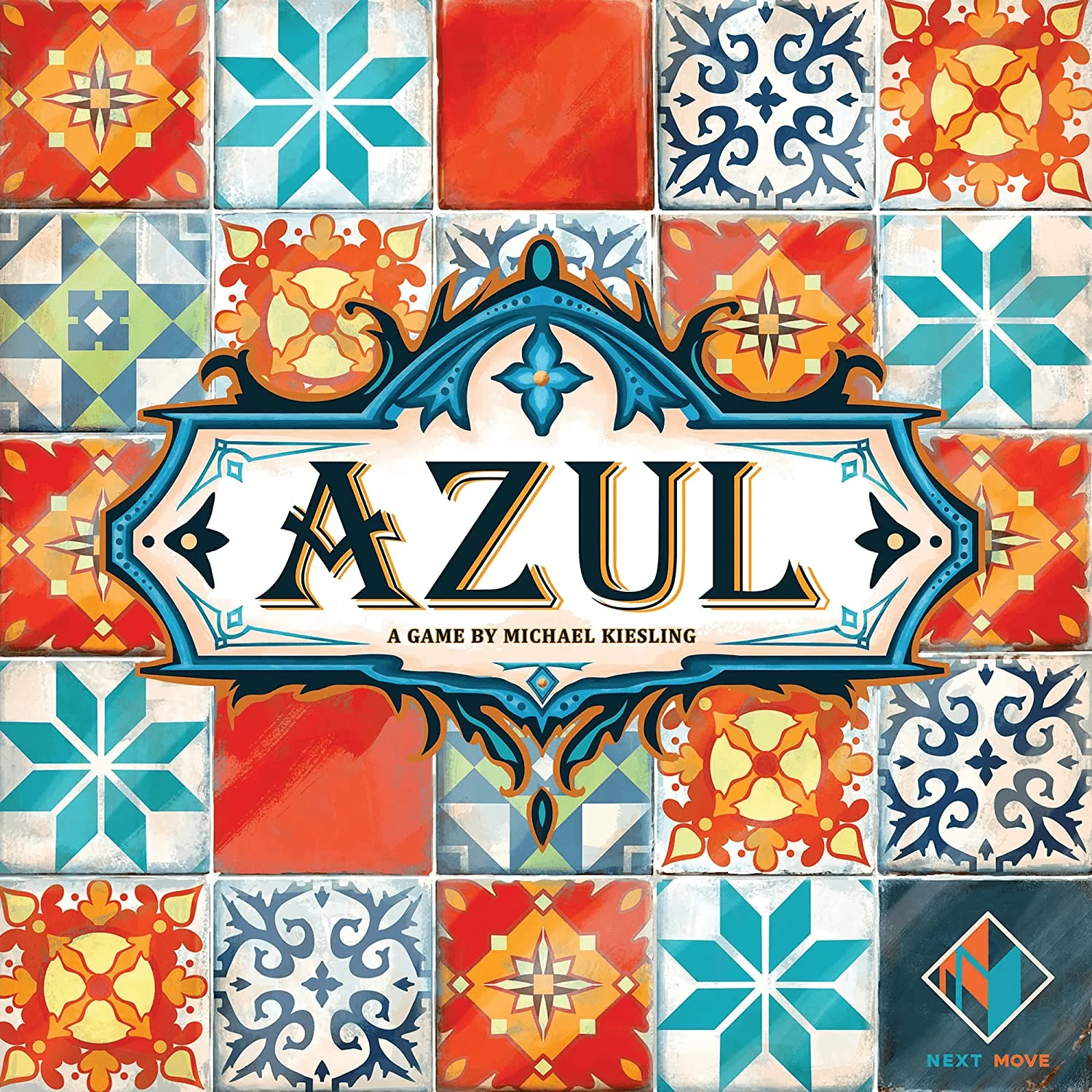
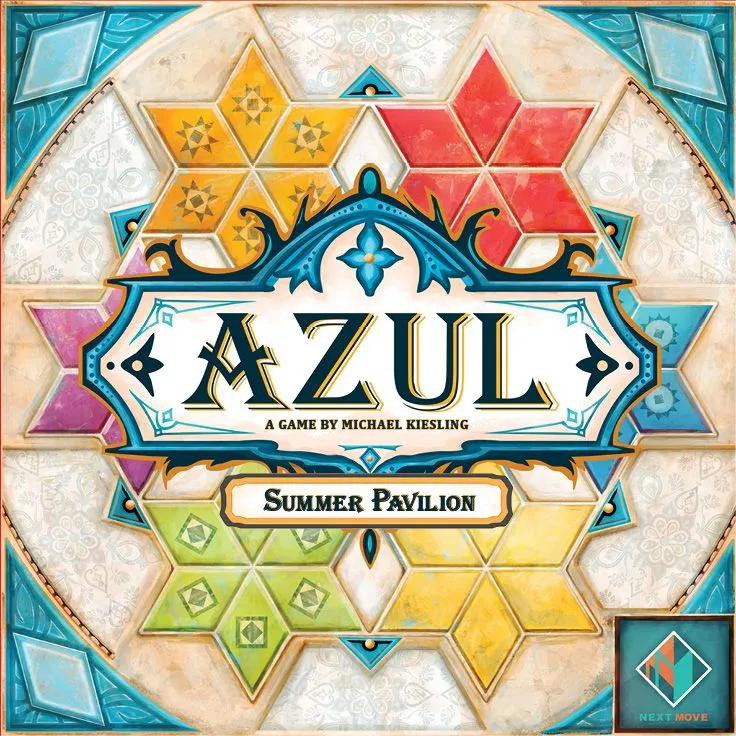
At the turn of the 16th Century, King Manuel I commissioned Portugal's greatest artisans to construct grandiose buildings. After completing the Palaces of Evora and Sintra, the king sought to build a summer pavilion to honor the most famous members of the royal family. This construction was intended for the most talented artisans — whose skills meet the splendor that the royal family deserves. Sadly, King Manuel I died before construction ever began. In Azul: Summer Pavilion, players return to Portugal to accomplish the task that never began. As a master artisan, you must use the finest materials to create the summer pavilion while carefully avoiding wasting supplies. Only the best will rise to the challenge to honor the Portuguese royal family. Azul: Summer Pavilion lasts six rounds, and in each round players draft tiles, then place them on their individual player board to score points. Each of the six colors of tiles is wild during one of the rounds. At the start of each round, draw tiles at random from the bag to refill each of the five, seven, or nine factories with four tiles each. Draw tiles as needed to refill the ten supply spaces on the central scoring board. Players then take turns drafting tiles. You can choose to take all of the tiles of a non-wild color on a factory and place them next to your board; if any wild tiles are on this factory, you must take one of them. Place all remaining tiles in the center of the table. Alternatively, you can take all tiles of a non-wild color from the center of play; you must also take one wild tile, if present. After all tiles have been claimed, players then take turns placing tiles on their individual boards. Each board depicts seven stars that would be composed of six tiles; each space on a star shows a number from 1-6, and six of the stars are for tiles of a single color while the seventh will be composed of one tile of each color. To place a tile on the blue 5, for example, you must discard five blue or wild tiles from next to your player board (with at least one blue being required), placing one blue tile in the blue 5 space and the rest in the discard tower. You score 1 point for this tile and 1 point for each tile within this star connected to the newly placed tile. If you completely surround a pillar, statue, or window on your game board with tiles, you get an immediate bonus, taking 1-3 tiles from the central supply spaces and placing them next to your board. At the end of the round, you can carry over at most four tiles to the next round; discard any others, losing 1 point for each such tile. After six rounds, you score a bonus for each of the seven stars that you've filled completely. Additionally, you score a bonus for having covered all seven spaces of value 1, 2, 3 or 4. You lose 1 point for each remaining tile unused, then whoever has the most points wins. —description from the publisher

More Info
Go Nuts for Donuts
Go Nuts for Donuts

Time: 20 minPlayers: 2-6

Go Nuts for Donuts is a fast-paced card game for the whole family with just a sprinkle of strategy. Outsmart your opponents and collect donuts hot out of the oven for points. But beware, if two players go after the same donut, then no one gets it! In Go Nuts for Donuts, players lay out donuts from the deck equal to the amount of players plus one. Each player has a number card for each donut that is out. Players all pick a donut they want by placing one of their number cards face down on the table. Players simultaneously reveal their number. If two or more players have matching numbers, that donut is discarded and no one gets it. If you're the only player that bid for the donut, than you take it and place it face up in front of you. Collect sets, unique and powerful donuts, and pairs of donuts to maximize points. Contents 70 donut cards (full-size cards with brown backs) Teal Chocolate Frosted (3) Donut Holes (6) Eclair (3) Glazed (5) Jelly Filled (6) Maple Bar (2) Plain (7) Note that there was a misprint in the 2017 rules incorrectly stating the total of Plain donuts to be only 6. Powdered (4) French Cruller (1 teal) Pink Boston Cream (6) Double Chocolate (2) Red Velvet (2) Sprinkled (2) French Cruller (1 pink) Purple Bear Claw (2) Cinnamon Twist (2) Coffee (2) Day Old Donuts (1) Milk (1) Old Fashioned (2) French Cruller (1 purple) Blue Maple Frosted (2) Mucho Matcha (2) Raspberry Frosted (2) Strawberry Glazed (2) French Cruller (1 blue) 42 selection cards six sets of miniature cards with white backs. Fronts display the numerals 1 through 7 7 donut row indicators cardboard chits with numerals 1 through 7

More Info